The maximum combined panel output under standard test conditions.
 SUNTIAGOENERGY Back to overview Talk to us
RESIDENTIAL SOLAR CASE STUDY · SANTIAGO
One home.
75% lower ICE bill.
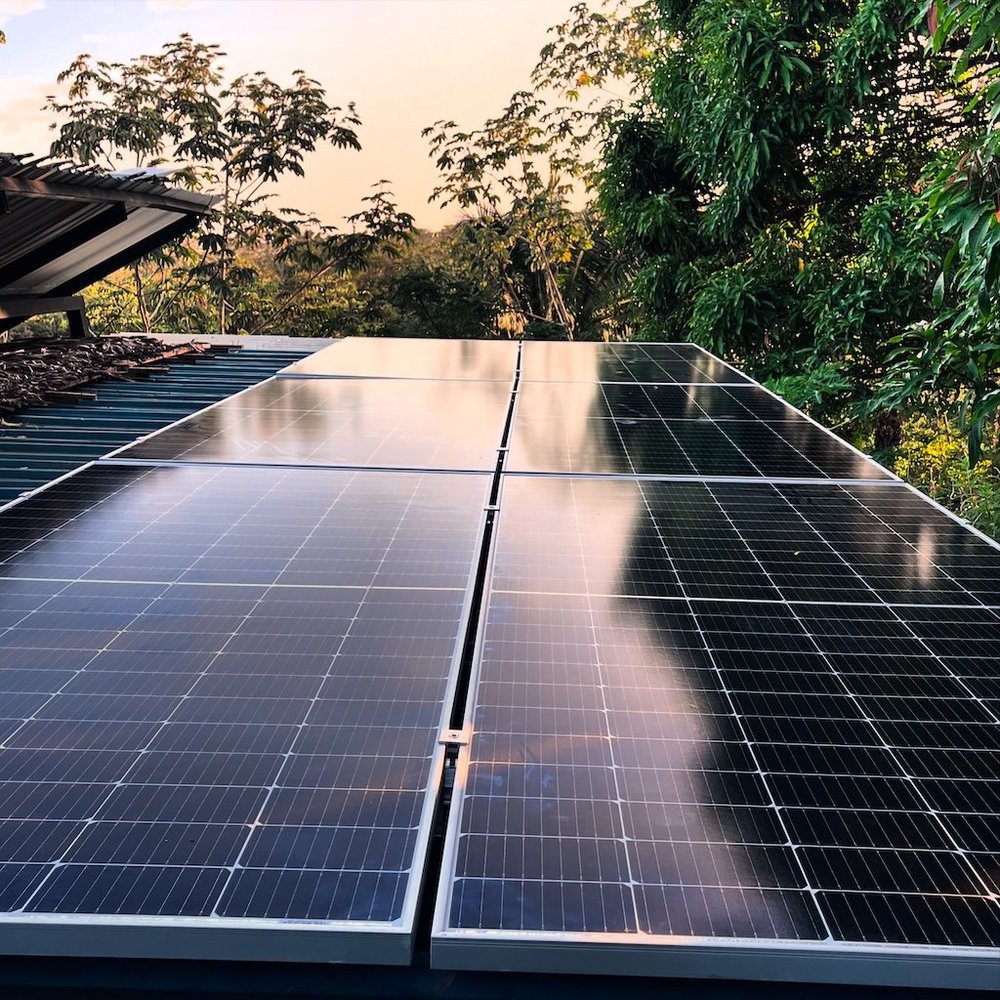
This homeowner was paying approximately $400 per month to ICE. With a 6.6 kWp solar array, a 12 kW inverter and a 10 kWh battery, the bill fell to approximately $100 per month.
Based on the customer’s reported before-and-after monthly bills. Results vary with consumption, weather, tariffs and system settings.
BEFORE$400approx. ICE bill / month
AFTER$100approx. ICE bill / month
REDUCTION75%less paid to ICE
SAVING$300approx. per month
THE INSTALLED SYSTEM
Three numbers, three different jobs.
The panel rating, inverter power and battery capacity are often confused. Here is what each part actually means.
Manages energy between solar, battery, the home and the ICE grid.
Stores energy for use after sunset and during an outage.
HOW THE SAVING HAPPENS
Use solar first. Buy the remainder from ICE.
No electricity is sold to the grid. The system is designed to use solar energy inside the home and store available energy in the battery.
DaylightThe panels supply household demand while solar is available.
StoreAvailable solar charges the battery instead of being exported.
LaterThe home uses stored energy; ICE supplies only what is still required.
THE BILL, MADE VISIBLE
About $300 stays with the homeowner each month.
$400$300$200$100$0
≈ $3,600estimated annualized saving if the monthly difference remains consistent
WHAT THE RESULT DOES — AND DOES NOT — SHOW
A real result needs context.
It shows the bill reduction
The reported monthly ICE cost changed from approximately $400 to approximately $100.
It does not equal energy independence
The home still uses ICE when demand exceeds available solar and stored battery energy.
12 kW is not solar production
The inverter’s 12 kW rating describes power handling. The twelve panels provide 6.6 kWp of solar capacity.
Payback needs the project price
Simple payback is calculated as installed cost divided by the estimated annual saving of about $3,600.
WHAT THE HOME RUNS
A normal home with several serious loads.
The inverter must handle simultaneous power demand. The battery capacity determines how long selected loads can continue when solar and ICE are unavailable.
Pool pump
1.5 kW
Water pumps
2 × 1.5 kW
Water heater
6 kW instantaneous
Refrigerators
3 units
Air conditioner
Cooling
Electric stove
Cooking
Lighting
Throughout the home
Television
Entertainment
Router
Internet connection
Kettle
Short high-power load
Coffee machine
Everyday use
Other appliances
Normal household loads
Not everything runs continuously. Inverter power is sized for loads that may overlap. Battery runtime depends on which appliances are selected and how long they operate.
YOUR HOME WILL BE DIFFERENT
Start with your ICE bill and the appliances that matter.
We use your actual consumption and priorities to size the system.
Discuss your home